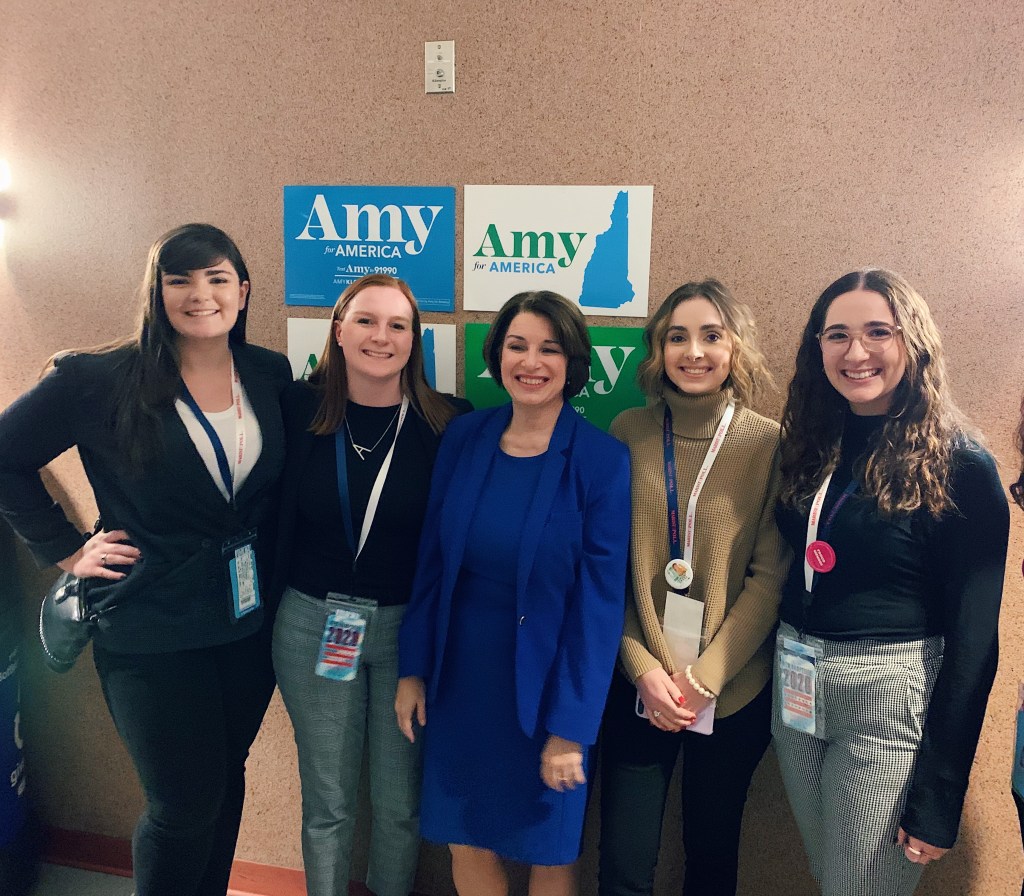
A record number of women announced that they were running for president in 2020. Yet, these incredibly qualified women face a different set of standards than their male counterparts.
Elizabeth Warren, Kamala Harris, Kirsten Gillibrand, Amy Klobuchar, Marianne Williamson, and Tulsi Gabbard, are Democratic women who announced that they were running back in 2019. After a record-breaking midterm election 2018, and with more women serving in Congress in history, it was thrilling to see so many women running for president in 2020. In the end, all of the women ended up dropping out, but Kamala Harris is now Joe Biden’s running mate on the Democratic ticket.
Throughout the entire duration of these female candidates campaigns, these women faced questions of whether or not they are “likable enough” to the public and have been asked inappropriate questions that would not be asked to a man. None of these questions pertain to their stances on legislation, but rather how they look, dress and speak.
Immediately following Warren’s announcement that she was forming an exploratory committee in the beginning of the year, an article was published asking if Warren would face the same challenges as Hillary Clinton faced in 2016 about being likable. Warren and Clinton are completely different candidates with different backgrounds. Although they have similar policy stances and positions, this article compared them on the topic of being “likable.” The article asked whether Elizabeth Warren would face the same criticisms of appearing as too “elitist,” and “cold,” which were criticisms that Hillary Clinton faced.
This should not even be a discussion. If an article is going to compare Clinton and Warren, it should be on the basis of policy issues or their experiences. It should not be compared whether or not they appear to be warm enough or if they are shrill. These are not the same criticisms that a male candidate faces.
Similarly, Kirsten Gillibrand was asked by a reporter if she was ,”too nice,” to take on President Trump. As a woman, is being poised and respectful considered being too nice? How else should she behave? If she were loud and aggressive, the media would also criticize her for being too angry or rude. On the other hand, a man running for president would not be criticized if he was loud and aggressive.
Since becoming Vice President Biden’s running mate, Kamala Harris has faced criticism that is sexist and unfair. She has been unfairly criticized, called shrill, harsh, aggressive and other countless names that a male running mate would not be called. Research unfortunately demonstrates that voters hold women to a higher standard in politics. Voters expect women to have more experience, come off as likable, and be calm.
All eyes were on Harris during the vice presidential debate a few weeks ago. Harris’ actions appeared to be very strategic during the debate in order for her to not be judged afterwards. While Vice President Pence was speaking, she would smile, or keep a mostly neutral expression in order to not come off as angry. When Pence did try to interrupt her at several points during the debate, she told him, “I’m speaking,” in a calm tone.
But unfortunately as expected after the debate, politicians, journalists and other Twitter users claimed that she was not likeable, too angry and that her facial expressions were inappropriate.
After the vice presidential debate, President Trump visited Fox News to give his review of the senator’s performance.
“Totally unlikable,” he said during an interview on Fox Business. He also referred to her as a “monster,” twice during the interview.

In a tweet, Senator Chuck Grassley, a Republican senator from Iowa, stated that he would prefer to have dinner with Vice President Mike Pence, since he was more likeable in Grassley’s view than Senator Harris.

For many women in professional settings, Harris’s situation during the debate was a familiar one. She was forced to listen to Pence as he interrupted her and lied during the debate. Harris also had to carefully articulate her words and emotions in order to be perceived positively. She had to come off as strong, but not aggressive, and display her emotions in a way that made her seem human, but not as hysterical. Many women in the corporate world face situations like this everyday with their male colleagues.
Women should not be attacked for aspects of themselves that they cannot control. Female politicians should not be criticized for how they dress, their tone of voice or whether or not they are competent enough to do the job. Instead, we should be having a conversation about the policies that they stand for or the positions that they are taking.
So how can we end this question of likability with female politicians? For one, reporters and the media can stop asking female politicians sexist questions or writing articles about how they dress. If the media does not fuel the conversation for female candidates being too cold or elitist, the public will talk less about it. The conversation can be shifted to policy issues and matters that affect Americans. People can begin discussing the female candidates stances on climate change, or healthcare rather than the appearance of these candidates.
Criticize female candidates for their policy positions, but do not criticize them for being likable enough.
 Amelia Morel